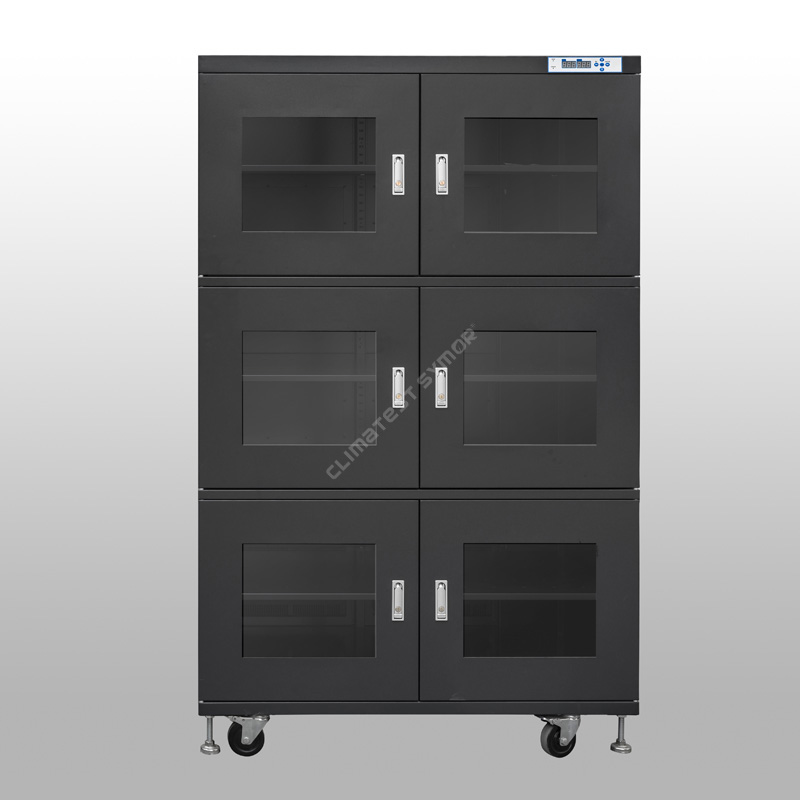
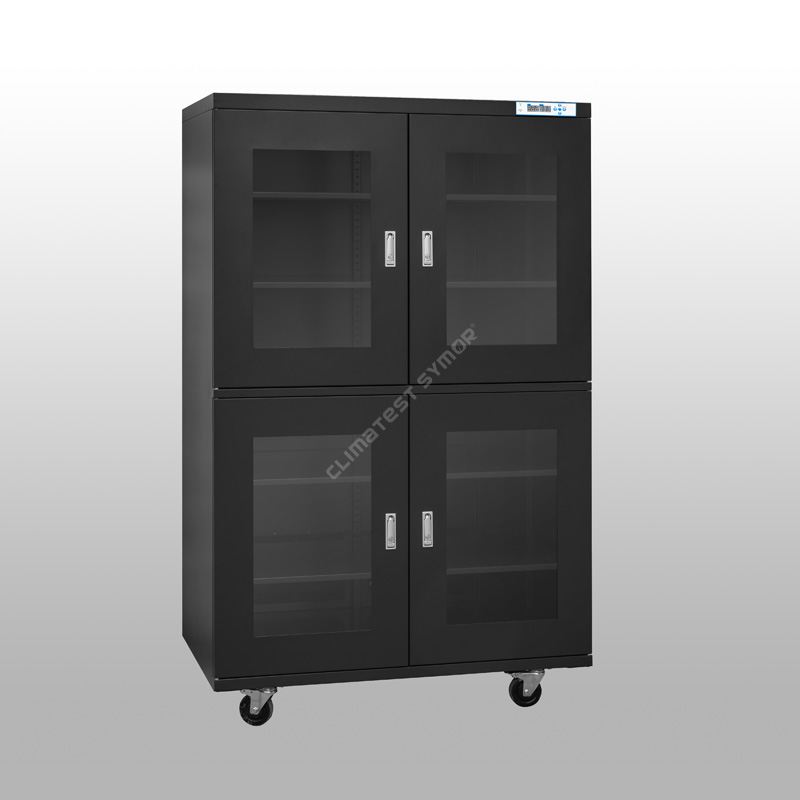
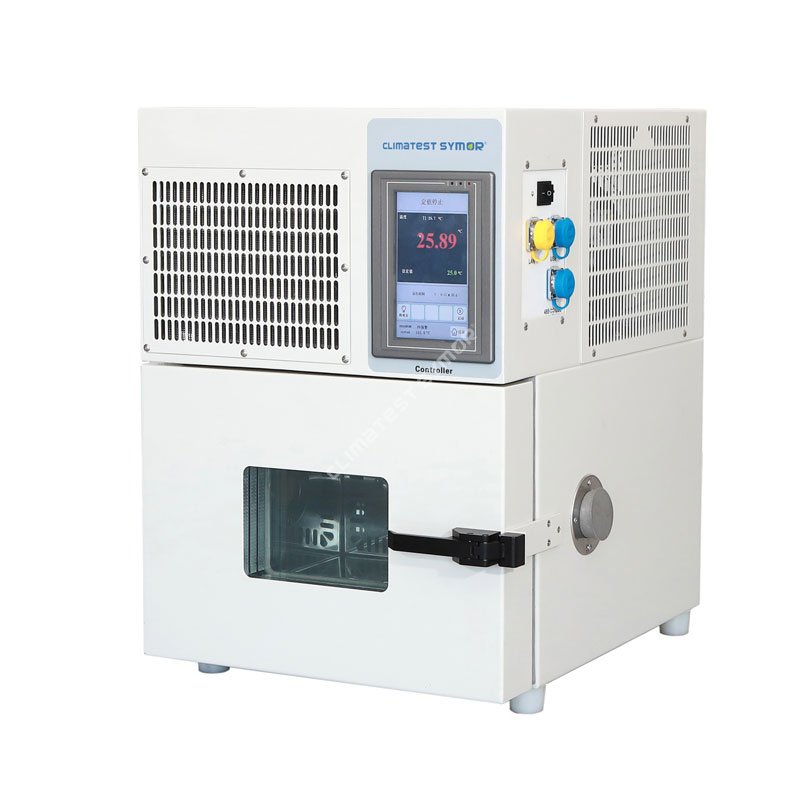
Products do not fail only because of poor design. Many failures appear when heat, cold, humidity, cycling stress, or unstable storage conditions expose weaknesses that were invisible in a standard lab. That is why more manufacturers now treat environmental simulation as a practical decision tool instead of a last-minute checkbox.
An Environmental Test Chamber helps manufacturers verify whether parts, materials, assemblies, and finished products can withstand real-world temperature and humidity conditions before they reach customers. This article explains the most common pain points buyers face, including inconsistent test results, hidden durability risks, delayed product launches, rework costs, and uncertainty when choosing the right chamber. It also outlines what features matter most, where these chambers create value, and how Symor Instrument Equipment Co ., Ltd. can support more reliable validation workflows for modern production and research teams.
Modern products are expected to survive more than ideal indoor conditions. Electronics may be shipped through humid ports, automotive components may face repeated hot and cold cycling, plastics may deform in storage, and medical or laboratory materials may lose consistency if the surrounding climate is not controlled. Even when a product performs well in a stable room, it may still fail once it faces transportation stress, warehouse fluctuations, or field conditions.
This is where an Environmental Test Chamber becomes valuable. It creates controlled and repeatable conditions so teams can observe how products behave under targeted environmental stress. Instead of guessing whether a seal will hold, a coating will crack, or an assembly will drift out of tolerance, manufacturers can test those risks directly. That means fewer surprises after shipment and fewer customer complaints after installation.
For research teams, the chamber supports faster iteration. For quality managers, it provides stronger evidence for release decisions. For procurement teams, it lowers the hidden cost of failures, returns, and warranty claims. In short, environmental testing turns uncertainty into measurable information.
Many buyers do not start by searching for equipment. They start with a problem. They are dealing with unstable product performance, delayed validation, or repeated complaints from the market. A well-designed Environmental Test Chamber helps solve those practical problems at the root.
Common customer pain points include:
Instead of treating these issues as isolated incidents, environmental testing helps teams build a structured validation process. A chamber can simulate high temperature, low temperature, humidity exposure, and cyclic changes in a controlled space. That allows engineers to identify weak points before those weaknesses become expensive field failures.
For example, a supplier testing connectors, sensors, housings, batteries, packaging, adhesives, or electronic assemblies can quickly see whether a design is robust enough for its target market. That early visibility matters because fixing a problem at the sample stage is far less costly than fixing it after mass production begins.
An Environmental Test Chamber is used wherever climate conditions can influence product reliability, shelf life, safety, or performance consistency. The exact application changes by industry, but the core purpose remains the same: create dependable test conditions and reduce uncertainty before market release.
| Industry | Typical Test Focus | Why It Matters |
|---|---|---|
| Electronics | Heat resistance, condensation risk, humidity impact, thermal cycling | Protects circuits, solder joints, housings, and long-term reliability |
| Automotive | Component durability under hot, cold, and rapid environmental changes | Reduces field failure in sensors, connectors, plastics, and interior parts |
| Pharmaceutical and laboratory | Stability, controlled storage, material consistency | Supports safer handling, validation, and product quality control |
| Plastics and materials | Deformation, aging, cracking, surface change | Improves formulation confidence and material selection |
| Aerospace and defense | Reliability under extreme environmental stress | Supports demanding qualification expectations and risk reduction |
| Consumer goods | Packaging durability, storage behavior, transport tolerance | Prevents appearance defects and performance issues in the market |
Because testing needs vary so widely, buyers should not choose a chamber based only on price. The right model is the one that matches the product size, target conditions, test frequency, and documentation needs of the actual application.
When comparing options, it is easy to focus only on temperature range or chamber volume. Those specifications matter, but they are not enough. A useful Environmental Test Chamber must also support stable control, repeatability, safe operation, and day-to-day usability.
Buyers should also think beyond current projects. If future testing may require different sample sizes or more advanced programs, choosing a chamber with room for growth can prevent another purchase too soon.
That is one reason many customers prefer working with experienced manufacturers such as Symor Instrument Equipment Co ., Ltd., because the decision is not only about equipment supply. It is also about matching the chamber configuration to the testing objective, the lab space, and the workflow of the people who will use it every day.
Some companies still rely mainly on post-production inspection, complaint handling, or supplier feedback to catch environmental durability problems. That approach may seem simpler at first, but it often creates a longer and more expensive loop.
| Approach | What Happens | Typical Result |
|---|---|---|
| Reactive quality control | Issues are discovered after failure, shipment, or customer use | Higher rework cost, slower response, reputational risk |
| Preventive environmental testing | Weaknesses are found during design, sample review, or pre-release validation | Faster correction, stronger confidence, lower downstream loss |
The difference is not theoretical. When a business identifies environmental sensitivity early, it can revise materials, improve sealing, adjust tolerances, or change packaging before damage spreads through production or distribution. That is exactly why an Environmental Test Chamber often pays for itself through avoided failure costs rather than through simple equipment utilization alone.
The best selection process starts with the test objective, not with the product brochure. Buyers should define what they need the chamber to prove. Is the priority storage simulation, humidity exposure, cycling durability, or accelerated screening? Once that goal is clear, selection becomes far more precise.
A smaller chamber may be ideal for routine sample verification in a limited-space lab, while a larger system may better serve continuous validation in manufacturing or advanced R&D environments. The point is not to buy the biggest unit. The point is to choose the chamber that makes your testing process more dependable and more efficient.
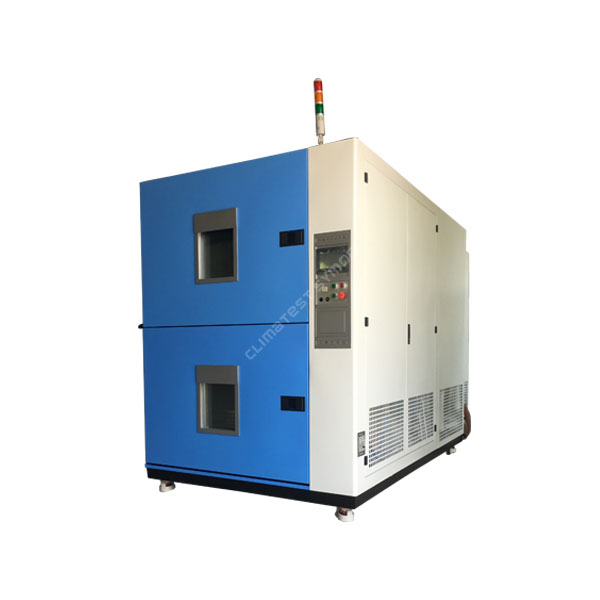
Buying a chamber is only the first step. The real value appears when teams integrate it into a disciplined decision process. That means documenting test methods clearly, defining pass and fail criteria in advance, and reviewing results across design, quality, and production teams instead of keeping test data isolated in one department.
Practical ways to improve results include:
When this process is done well, an Environmental Test Chamber becomes more than lab equipment. It becomes part of how a company protects product reputation, shortens decision cycles, and builds confidence before a launch.
What is an Environmental Test Chamber used for?
It is used to simulate controlled temperature and humidity conditions so manufacturers can evaluate how products, components, and materials perform before shipment or release.
Why is environmental testing important before product launch?
It helps uncover hidden weaknesses early, which reduces the risk of failure in transport, storage, or end-use conditions and lowers the cost of rework or customer complaints.
Which products are commonly tested in an Environmental Test Chamber?
Common examples include electronics, automotive parts, plastics, coatings, packaging, sensors, laboratory materials, and finished assemblies that must remain stable under changing climates.
How do I know what chamber size I need?
Start with sample dimensions, batch quantity, airflow requirements, and future testing plans. The correct size should allow realistic testing without creating unnecessary idle capacity.
What should I prioritize when comparing suppliers?
Look at control stability, chamber uniformity, programmability, durability, ease of operation, and the quality of technical support after installation.
Can a chamber help reduce warranty claims?
Yes. By identifying environmental sensitivity before products reach the market, companies can correct design or material issues earlier and reduce downstream failure costs.
If your team needs a dependable Environmental Test Chamber for product validation, climate simulation, or routine laboratory testing, Symor Instrument Equipment Co ., Ltd. can help you match the right configuration to your application. A better chamber choice today can mean fewer failures, smoother qualification, and greater confidence in every shipment. Contact us to discuss your testing requirements and find a solution built for your workflow.