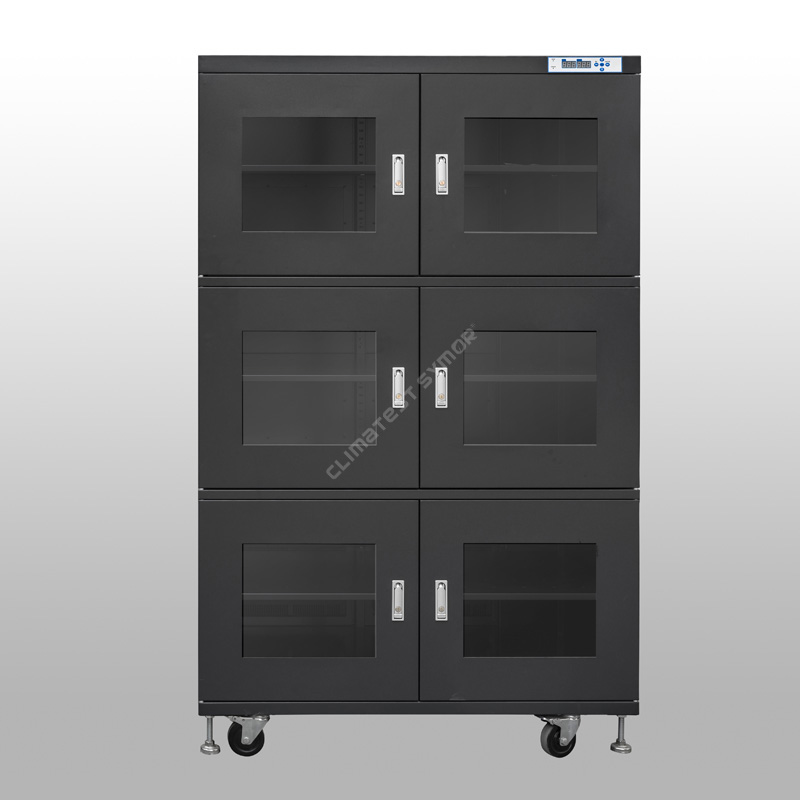
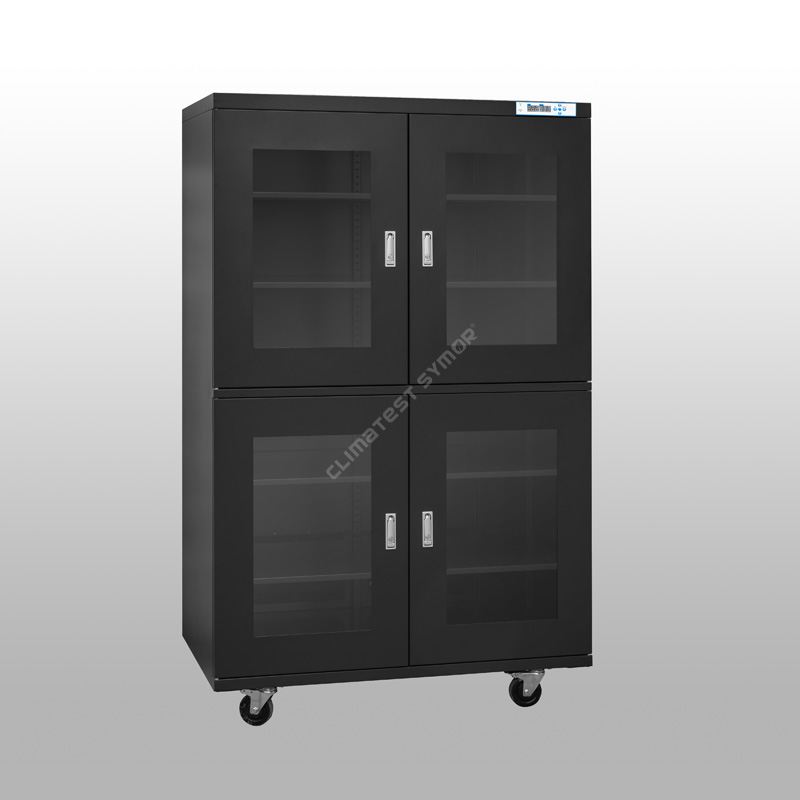
A DRY-CABI is a controlled-humidity storage cabinet engineered to protect sensitive instruments, optical components, photography gear, electronic parts, and laboratory materials from moisture-related degradation.
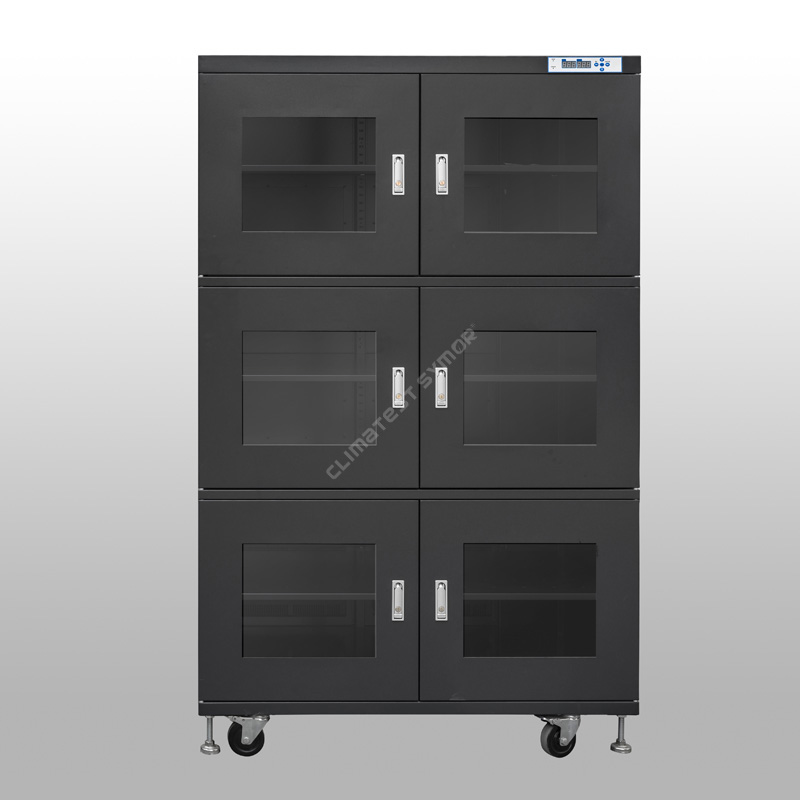
A DRY-CABI functions as a humidity-stabilized enclosure designed to maintain a defined internal relative humidity (RH) range through a combination of dehumidification modules, precision sensors, insulated architecture, and automated feedback control. Unlike conventional sealed storage, which often traps moisture, a DRY-CABI actively extracts internal humidity, monitors conditions in real time, and regulates airflow within its compartment.
At its core is a desiccant-based or Peltier-based dehumidification module. Both technologies are engineered to sustain long-term, low-RH output without causing thermal damage. High-precision hygrometers continuously track humidity levels and trigger automatic cycles to maintain a consistent target range. Industrial-grade seals along door frames minimize vapor exchange with the surrounding environment, while tempered glass panels or reinforced steel doors support structural stability and operational transparency.
Internal modular shelving optimizes load distribution, while the electrical control unit maintains low energy consumption through standby logic. Safety mechanisms prevent overheating, while embedded diagnostics allow predictive maintenance. For environments with fluctuating ambient conditions—such as laboratories, production floors, cleanrooms, or photographic studios—the cabinet's controlled microenvironment ensures stability independent of external humidity shifts.
This storage paradigm is especially suitable for moisture-sensitive assets such as precision lenses, printed circuit boards, microchips, polymers, archival documents, coatings, powders, and laboratory reagents. The cabinet eliminates risks such as mold, oxidation, warping, corrosion, and chemical instability. In industries where quality standards or regulatory frameworks require strict environmental conditions, a DRY-CABI provides a reliable solution that meets operational, maintenance, and compliance expectations.
To support professional procurement decisions, the following parameter set outlines the technical features typically found in high-end DRY-CABI systems. This table includes essential engineering metrics that influence performance, reliability, and operational cost:
| Parameter Category | Specification Details |
|---|---|
| Humidity Range | Adjustable 20%–60% RH or ultra-low 1%–10% RH depending on model |
| Dehumidification Method | Regenerative desiccant module or thermoelectric Peltier module |
| Sensor Accuracy | ±2% RH precision sensor with continuous digital monitoring |
| Structural Materials | Cold-rolled steel body; powder-coated surface; tempered glass door options |
| Shelving System | Adjustable anti-static aluminum or stainless-steel shelves |
| Door Seal Design | Multi-layer moisture-blocking magnetic gasket |
| Power Consumption | Typically 8–25W in steady-state mode, energy-saving standby |
| Control Interface | LCD or touch-panel humidity control with error diagnostics |
| Safety Features | Over-current protection, thermal safety cutoff, surge resistance |
| Lighting Options | Low-heat LED illumination to avoid internal temperature rise |
| Internal Volume Options | Available from 30L to 1500L to meet industrial and laboratory capacity demands |
| Noise Level | Below 30 dB under normal operation |
| Environmental Operating Range | Optimized for 0°C–45°C ambient temperature |
Each parameter contributes to the cabinet’s ability to sustain its humidity target. A high-accuracy sensor ensures minimal deviation, while a durable steel structure eliminates micro-leaks. Energy-saving dehumidification modules ensure long-term stability without escalating operational costs.
For industries with varied material sensitivity thresholds, the ability to set custom humidity targets is essential. Ultra-low humidity models are often required for semiconductor, SMT production, aerospace, or scientific research. General-purpose humidity ranges serve photographic, archival, and industrial maintenance applications.
A DRY-CABI is relevant in scenarios where moisture exposure can cause irreparable damage or performance drift. Such scenarios include precision optical storage, sensitive instrument protection, electronics assembly, laboratory sample preservation, and controlled archiving. The cabinet’s stable humidity environment mitigates major risks such as moisture absorption, dimensional instability, electronic failure, and optical haze formation.
Beyond technical performance, operational workflows also benefit. Standardized storage conditions reduce inspection cycles, minimize unplanned maintenance, and increase asset longevity. This stability supports manufacturing consistency, research reproducibility, and quality assurance frameworks.
Below are two commonly referenced questions from buyers, engineers, and facility managers evaluating DRY-CABI adoption:
Q1: How does a DRY-CABI maintain consistent humidity even when the door is opened frequently?
A1: A DRY-CABI relies on high-efficiency dehumidification modules and sensitive RH detection to restore its internal environment rapidly after each access event. When the door is opened, ambient moisture enters the compartment; the built-in sensor detects the RH deviation within seconds and triggers an accelerated dehumidification cycle. Industrial-grade door gaskets limit unnecessary vapor intrusion, and insulated structural materials stabilize thermal conditions to shorten the recovery period. Models designed for operational environments with frequent access often include a larger dehumidification capacity to ensure recovery within controlled time parameters.
Q2: What types of items benefit most from long-term storage in a DRY-CABI?
A2: The cabinet is particularly effective for storing optical devices, professional lenses, microscopes, camera bodies, printed circuit boards, integrated circuits, measurement instruments, composite materials, and archival media. These items are prone to moisture absorption, which can lead to mold growth, oxidation, swelling, delamination, and electronic failure. By maintaining the internal RH at a controlled level, the DRY-CABI prevents these degradation mechanisms and ensures predictable performance over time. Industries focused on precision manufacturing, laboratory R&D, electronics quality control, and photographic preservation derive the highest value from such humidity-controlled storage.
The future trajectory of humidity-controlled storage is influenced by three overarching forces: increasing miniaturization of electronic components, higher precision requirements across optical and scientific industries, and stricter standards within aerospace, semiconductor, medical device, and laboratory environments. These industries demand repeatable environmental conditions with near-zero tolerance for moisture variability.
Manufacturers are responding with advancements such as more efficient regenerative modules, IoT-enabled environmental tracking, predictive maintenance analytics, and energy-efficient configurations for continuous operation. Modular enclosure sizes, sensor upgrades, expanded humidity range capabilities, and enhanced insulation technologies further reinforce the importance of consistency, energy conservation, and low acoustic output.
The shift toward automated, data-integrated cabinet systems is reshaping user expectations. Remote monitoring dashboards, access control logs, and temperature-humidity event tracking are rising as standard features. These innovations enhance workflow visibility and help organizations maintain compliance with quality assurance protocols. As global industries continue to digitalize their operations, DRY-CABI systems will increasingly become embedded components of facility management ecosystems.
In this context, Symor has developed solutions that emphasize stable humidity control, high-precision sensing, and engineered structural reliability. The product line covers a spectrum of capacities and performance classes suitable for laboratories, semiconductor facilities, industrial production sites, and photographic environments. These systems are designed with attention to durability, consistency, and ease of operation, supporting the long-term protection of sensitive assets.
For inquiries about specifications, configurations, or procurement guidance, contact us to obtain detailed product support and professional consultation.