The Mini Temperature Test Chamber has evolved from a niche instrument to an essential tool. Unlike big walk-in rooms or large floor-standing units, mini temp chambers deliver precise thermal control within a compact footprint, enabling engineers to perform environmental stress screening directly at their workbenches.
The core advantage is simple: smaller thermal mass equals faster response times. A Mini Temperature Test Chamber can achieve temperature setting in minutes rather than hours, dramatically accelerating product development cycles while reducing energy consumption by up to 70% compared to standard-sized environmental chambers. This guide provides a comprehensive examination of real-world applications across electronics, battery technology, materials science, and research laboratories.
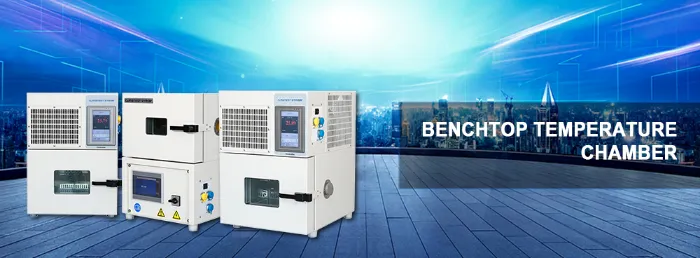
Electronics and Semiconductor TestingThe most widespread application of a Mini Temperature Test Chamber is in electronics development. Semiconductor packages, sensors, oscillators, batteries, and connectors all have temperature-dependent characteristics that must be characterized before system integration . Engineers use mini chambers to assess parametric drift, leakage currents, and cold-start behavior under controlled thermal conditions.
Typical components tested include:
•Mobiles and phones
•Integrated circuits (ICs) and microcontrollers
•MEMS sensors (accelerometers, pressure sensors, gyroscopes)
•Crystal oscillators and frequency references
•Power MOSFETs and IGBT modules
•Connectors and printed circuit board assemblies
The low thermal inertia of a mini chamber enables stepped stress experiments and fine-grained mapping of performance versus temperature . For example, an engineer can program a cycle from -40°C to +125°C in 5°C increments, holding for 10 minutes at each step while measuring key parameters. This level of granularity is impractical in larger chambers due to extended stabilization times.
Symor Mini Temperature Test Chambers now serve the photonics industry, which is explicitly designed for imaging sensors, photodetectors, laser sources, and other photonics components . These devices are often sensitive to temperature extremes and gradients during development and characterization.
Engineers working with optical components frequently face limited access to shared thermal chambers. Large systems are expensive and frequently overbooked, creating workflow bottlenecks. A Mini Temperature Test Chamber addresses this by providing a dedicated, repeatable thermal environment on every engineer's bench.
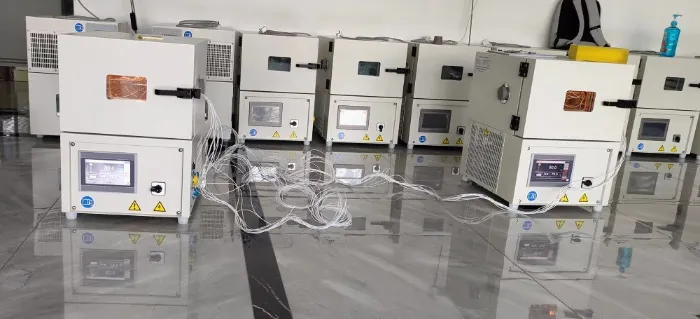
The battery testing industry has embraced mini chambers as standard equipment. Symor, a major supplier of mini temperature test chamber, offers TGDW-12 Mini Constant Temperature Chamber specifically for coin cell and small pouch cell testing . With an internal volume of 12 liters, this unit can accommodate up to 16 coin cells.
Environmental Simulation for Quality ControlFor quality assurance laboratories, a Mini Temperature Test Chamber provides the ability to perform condensation and damp-freezing tests per international standards. These tests simulate outdoor condensation and evaluate a material's resistance to water vapor diffusion.
Products commonly validated through this method include:
•Outdoor electronic enclosures
•Automotive exterior components
•Architectural coatings and sealants
•Packaging materials for sensitive goods
Calibration and metrology laboratories utilize mini temperature test chambers for instrument and sensor temperature dependency testing. Reference probes are conditioned at fixed temperatures while measurements are performed through external feedthroughs . This application benefits from the control stability and low spatial gradients that are easily achieved in a small enclosure.
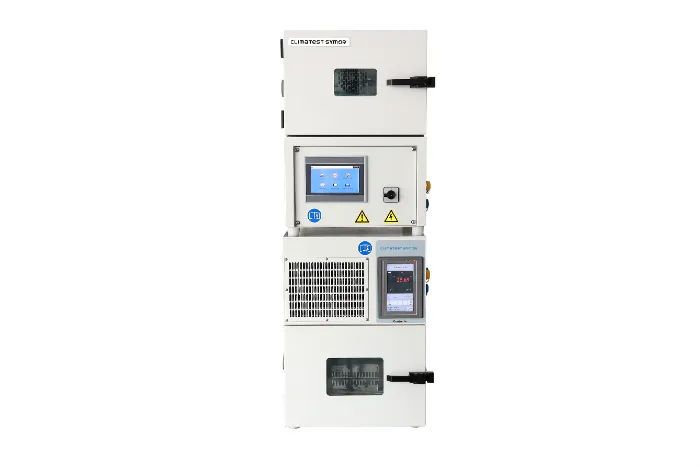
The Mini Temperature Test Chamber has matured from a space-saving alternative to a primary tool for environmental simulation. Its applications span virtually every industry that requires thermal validation of small components: from semiconductor fabs to battery laboratories, from medical device manufacturers to university research programs.
The selection of a mini chamber should be driven by application requirements first, then by physical constraints. Prioritize temperature range, ramp rate, and uniformity over physical size. A chamber that cannot reach your required extremes is useless regardless of how little bench space it occupies.
For engineers and laboratory managers, the message is clear: the era of waiting for access to a floor-standing chamber is over. A dedicated Mini Temperature Test Chamber on every bench accelerates development, improves data quality, and ultimately delivers more reliable products to market.