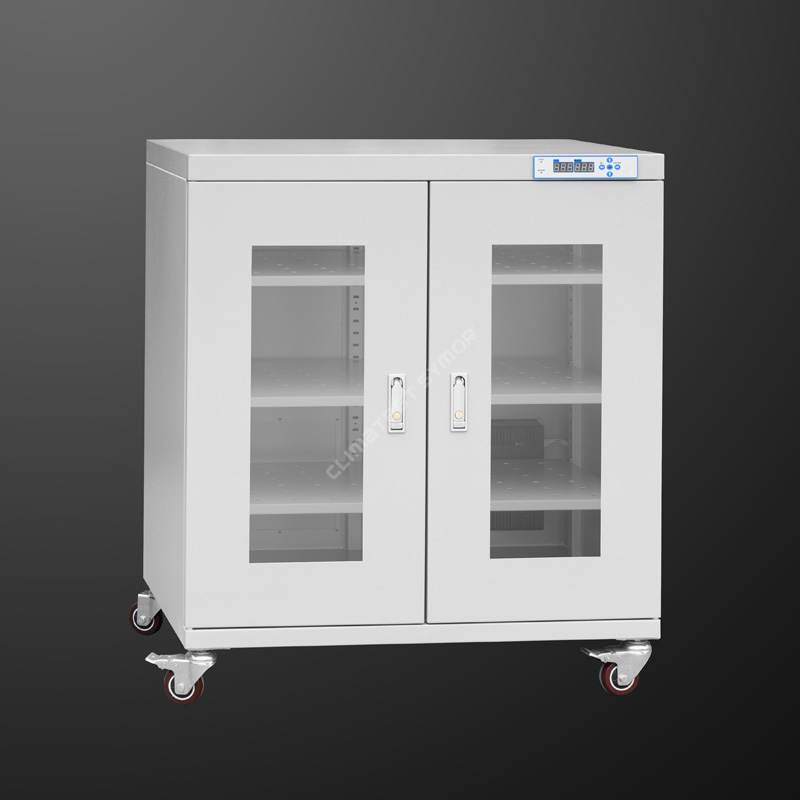
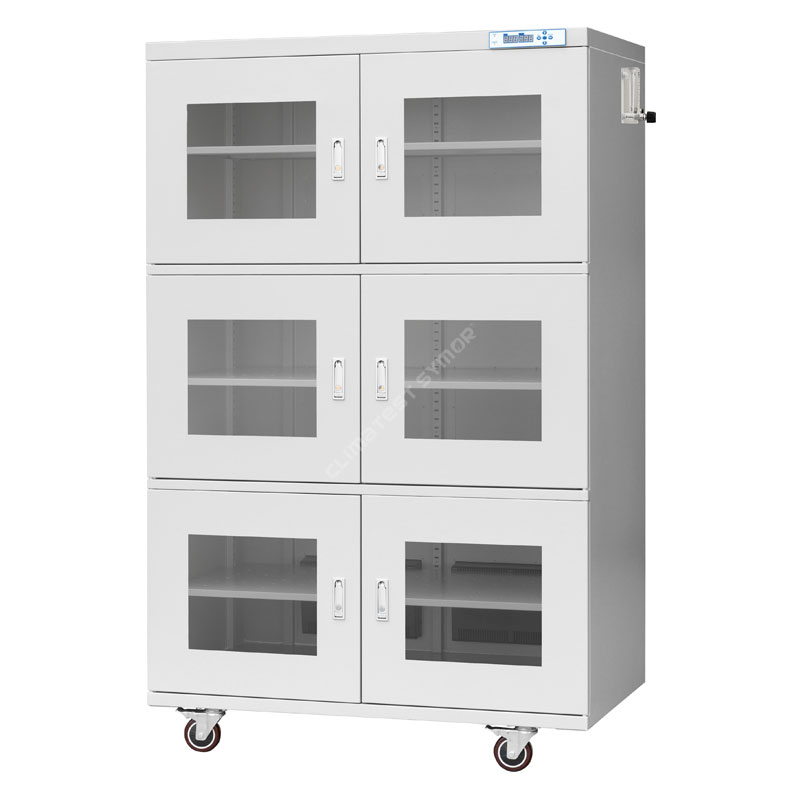
Reflow Process Dry Cabinet for BGA Microcracking
Product Positioning & BGA Microcracking Prevention Core Value
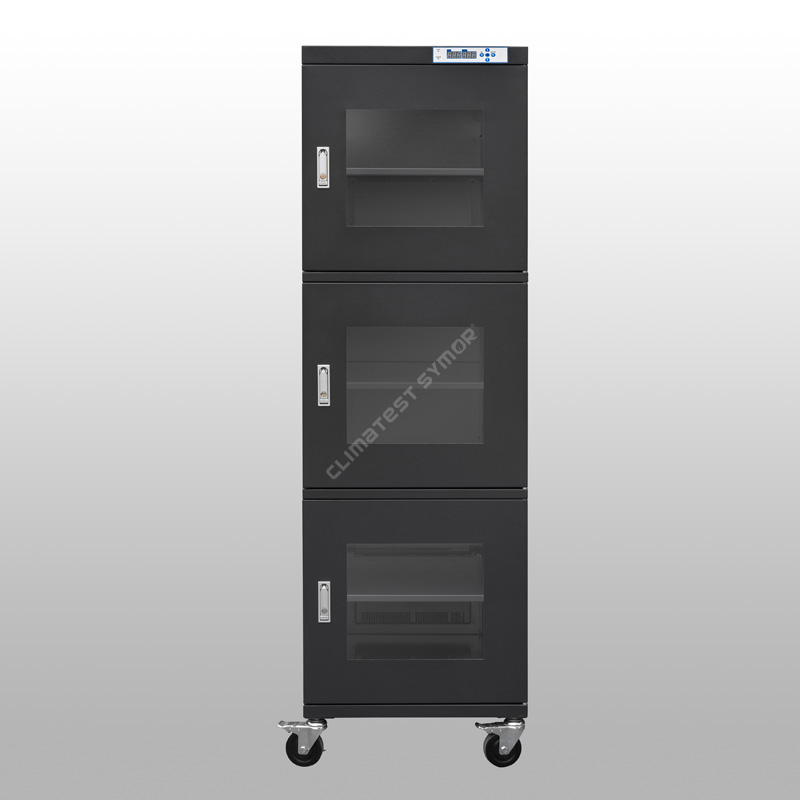
Climatest Symor® Reflow Process Dry Cabinet for BGA Microcracking is a professional, process-oriented industrial storage solution independently developed by our China manufacturer, specifically tailored for the storage of BGA (Ball Grid Array) components before and after the reflow soldering process. As a reliable factory and global supplier with 20+ years of humidity control, SMT process matching, and industrial storage experience, we focus on solving the core pain point of BGA reflow process—microcracking (also known as micro-fracture) caused by moisture absorption. This dry cabinet is designed to match the reflow soldering process flow, taking "moisture removal, humidity stabilization, and process compatibility" as the core, providing a stable ultra-low humidity storage environment for BGA components (including PBGA, CBGA, TBGA, FBGA), effectively eliminating moisture inside BGA packages, avoiding the "popcorn effect" during reflow soldering, and fundamentally preventing BGA microcracking, ensuring the soldering quality and reliability of BGA components, reducing rework rate and production losses for SMT, electronics, and semiconductor enterprises.
Core Functional Characteristics & BGA Microcracking Prevention Advantages
-
Reflow process-specific ultra-low humidity control (core highlight): Equipped with high-precision humidity sensor (error ≤±1.5%RH) and reflow-adapted dehumidification control system, which can stably maintain the internal humidity at ≤1%RH (adjustable 1%-3%RH), fully complying with IPC/JEDEC J-STD-033 standard for moisture-sensitive BGA components (MSL level 3-6). The system adopts rapid dehumidification and constant humidity optimization, which can quickly remove moisture absorbed by BGA packages (even for long-term stored BGA components), ensuring that the moisture content inside BGA meets the reflow soldering requirements, fundamentally avoiding microcracking caused by moisture vaporization during high-temperature reflow.
-
BGA microcracking targeted design: Combined with the structural characteristics of BGA components (ball grid array, plastic package, high sensitivity to moisture), the cabinet is optimized for BGA storage—internal airflow is evenly distributed (no dead corners), ensuring that each BGA component is fully exposed to the ultra-low humidity environment, and moisture is uniformly removed from the package. The shelves are designed with anti-collision, anti-scratch pads (ESD material), avoiding BGA ball damage and external mechanical microcracks during storage, double-protecting BGA integrity.
-
Reflow process flow compatibility: The Reflow Process Dry Cabinet for BGA Microcracking is designed to match the entire reflow soldering process, suitable for BGA component storage in three key links—pre-reflow temporary storage (after unpacking, before placement), in-reflow interval storage (between placement and reflow soldering), and post-reflow cooling storage (after reflow, before inspection). The fast humidity recovery function (≤25 minutes) adapts to the high-frequency access needs of reflow production lines, avoiding moisture intrusion during frequent door opening, ensuring that BGA components remain moisture-free throughout the process.
-
Intelligent moisture monitoring and microcracking pre-alarm: Equipped with real-time moisture content monitoring (optional) and humidity abnormal alarm function, which can not only display the internal humidity but also indirectly monitor the moisture content of BGA components (through humidity correlation analysis). When the humidity exceeds the set threshold (indicating potential moisture absorption), the system triggers sound + light alarm in time, reminding operators to handle it, preventing BGA components with excessive moisture from entering the reflow process and causing microcracking.
-
Maintenance-free long-life dehumidification for continuous production: Adopts advanced 4A molecular sieve dry unit with automatic regeneration function, optimized for 24-hour continuous operation of reflow production lines, with strong moisture absorption capacity, fast dehumidification speed, and stable performance. The dry unit has a projected service life of ≥15 years, no need to replace desiccant or dry unit regularly, greatly reducing the long-term operation and maintenance cost, and ensuring the continuity of BGA storage and reflow production.
-
ESD anti-static protection for BGA safety: Equipped with professional ESD anti-static coating (static resistance 10⁶–10⁸Ω) on the entire cabinet body and shelves (standard configuration for all models), effectively eliminating static electricity, avoiding static discharge damage to BGA internal circuits and solder balls. The anti-static design is compatible with SMT reflow workshop anti-static requirements, ensuring that BGA components are not damaged by static during storage and transfer.
-
Reflow process customization and compatibility: Fully compatible with different reflow soldering process parameters (such as high-temperature reflow, lead-free reflow), and can be customized according to the specific type of BGA components (different package sizes, MSL levels) and reflow production rhythm—adjustable humidity parameters, customized shelf spacing, and optional moisture content logging function, fully matching the diverse reflow process needs of BGA components.
Detailed Technical Parameters (Reflow Process & BGA Focus)
-
Model Range: Full series optional (98L-1436L), reflow process preferred model: TDU718B (BGA Microcracking Prevention)
-
Effective Storage Capacity: 718L (for TDU718B), large storage space, can store BGA components in batches—up to 150+ PBGA/CBGA components (10mm-50mm package size) or 200+ FBGA/TBGA components, meeting the batch storage needs of reflow production lines.
-
Humidity Control Performance: Automatic constant humidity control, adjustable range 1%-3%RH (default ≤1%RH), humidity control precision ≤±1.5%RH, 24-hour continuous operation, humidity fluctuation ≤±0.5%RH, dehumidification speed ≤25 minutes (from 60%RH to ≤1%RH under standard environment).
-
BGA Compatibility: Suitable for all common BGA component types—PBGA (Plastic Ball Grid Array), CBGA (Ceramic Ball Grid Array), TBGA (Tape Ball Grid Array), FBGA (Fine-Pitch Ball Grid Array), compatible with MSL level 3-6 moisture-sensitive BGA components, package size 10mm×10mm to 50mm×50mm.
-
Shelf Configuration: 5 pieces of adjustable anti-collision steel shelves, surface ESD anti-static coating + anti-scratch pads, height adjustable freely (adjustment interval 15mm), load-bearing capacity ≤80KG per shelf, avoiding BGA ball damage and mechanical microcracks.
-
Material & Surface Treatment: 1.2mm high-strength galvanized steel, surface treated with anti-corrosion coating + ESD anti-static coating (static resistance 10⁶–10⁸Ω), wear-resistant, corrosion-resistant, easy to clean, suitable for SMT reflow workshop environment.
-
Dimensions (TDU718B): Interior (W×D×H) 596×682×1723 mm; Exterior (W×D×H) 598×710×1910 mm, compact structure, suitable for reflow production line side, pre-reflow storage area, and post-reflow cooling area placement, convenient for BGA component transfer.
-
Dehumidification Unit: 4A molecular sieve dry unit, automatic regeneration function, service life ≥15 years, reflow process-optimized dehumidification algorithm, fast moisture removal for BGA packages.
-
Power Consumption: 18W, low energy consumption, energy-saving and environmentally friendly, suitable for 24-hour continuous operation in reflow production lines, matching the high-efficiency production rhythm.
-
Gross Weight: 110KG (for TDU718B), stable placement, anti-tipping design, ensuring the safety of BGA components during storage and transfer.
-
Certification & Compliance: ISO9001:2015 quality management system certified, CE certified, fully compliant with IPC/JEDEC J-STD-033 standard (moisture-sensitive component storage), compatible with lead-free reflow soldering process requirements, meeting the quality requirements of BGA reflow process storage.
Detailed Application Scenarios (Reflow Process & BGA Focus)
-
Pre-Reflow BGA Storage: This Reflow Process Dry Cabinet for BGA Microcracking is suitable for storing BGA components after unpacking and before placement on the SMT production line. The ultra-low humidity environment quickly removes moisture absorbed by BGA packages during transportation and storage, ensuring that the moisture content meets the reflow soldering requirements, avoiding microcracking caused by the "popcorn effect" during high-temperature reflow.
-
In-Reflow Interval Storage: Used for temporary storage of BGA components between placement and reflow soldering (e.g., when reflow ovens are busy or production line adjustments are needed). The stable low humidity environment prevents BGA components from absorbing moisture during the interval, ensuring that they remain moisture-free before entering the reflow oven, maintaining consistent soldering quality.
-
Post-Reflow Cooling Storage: Applied for storing BGA components after reflow soldering and before inspection. The ultra-low humidity environment avoids moisture condensation on the surface of BGA components during cooling (which may cause oxidation of solder balls and secondary microcracks), ensuring the integrity of BGA soldering joints and reducing rework rate.
-
Long-Term BGA Storage: Suitable for long-term storage of unpacked BGA components (MSL level 3-6), the ≤1%RH ultra-low humidity environment extends the infinite floor life of BGA components, preventing moisture absorption and package aging, ensuring that BGA components can be used directly in the reflow process without pre-baking, improving production efficiency.
-
High-Precision BGA R&D and Trial Production: Used in SMT R&D laboratories and trial production workshops, storing experimental BGA components, prototype products, and test samples. The stable low humidity and anti-collision design ensure the accuracy of reflow soldering experiments, avoiding microcracking caused by moisture or mechanical damage, ensuring the reliability of trial production results.
-
Lead-Free Reflow Process BGA Storage: Compatible with lead-free reflow soldering processes (higher reflow temperature than traditional leaded reflow), the ultra-low humidity control effectively eliminates moisture in BGA packages, avoiding microcracking caused by higher temperature vaporization, ensuring the quality of lead-free BGA soldering, complying with environmental protection and industry standards.
Detailed Product Advantage Elaboration (BGA Microcracking & Reflow Focus)
-
Fundamentally prevents BGA microcracking in reflow process: The ≤1%RH ultra-low humidity environment effectively removes moisture from BGA packages, eliminating the "popcorn effect" during high-temperature reflow (moisture vaporizes and expands, causing package microcracking). This targeted design directly solves the core pain point of BGA reflow soldering, reducing the rework rate of BGA components by more than 90%, greatly reducing production losses.
-
Reflow process flow fully compatible: Optimized for the three key links of BGA reflow process (pre-reflow, in-reflow, post-reflow), the fast humidity recovery function and compact design adapt to the high-frequency access and rapid transfer needs of reflow production lines, ensuring that BGA components remain moisture-free throughout the process, maintaining consistent soldering quality.
-
BGA-specific protection avoids secondary damage: The anti-collision, anti-scratch shelf design and ESD anti-static protection prevent two types of BGA damage—mechanical microcracks (caused by collision, scratch) and static damage (caused by static discharge). This double protection ensures the integrity of BGA components before and after reflow, further reducing production defects.
-
Stable humidity control for consistent quality: The high-precision humidity sensor and intelligent control system ensure that the internal humidity is stable at ≤1%RH, with minimal fluctuation, avoiding moisture absorption caused by humidity instability. This consistency ensures that every BGA component meets the reflow soldering requirements, improving the yield of BGA soldering and the reliability of final products.
-
Maintenance-free design adapts to reflow production rhythm: The 4A molecular sieve dry unit with automatic regeneration function requires no regular replacement, suitable for 24-hour continuous operation of reflow production lines, avoiding production interruptions caused by maintenance. The low energy consumption design reduces long-term operation costs, matching the high-efficiency, low-cost production needs of enterprises.
-
Strong adaptability and customization: Full range of models (98L-1436L) can meet the storage needs of different scale reflow production lines (small workshops, large factories); adjustable humidity parameters, customized shelf spacing, and optional moisture content logging function can be tailored according to the specific type of BGA components (package size, MSL level) and reflow process parameters, fully matching the diverse needs of BGA reflow storage.
-
Compliant with industry standards for quality assurance: Fully compliant with IPC/JEDEC J-STD-033 standard and lead-free reflow process requirements, ensuring that BGA storage meets industry quality standards, avoiding compliance risks. The Reflow Process Dry Cabinet for BGA Microcracking undergoes strict performance testing (humidity control, moisture removal speed, ESD protection) to ensure reliable operation in reflow process scenarios.
Reflow Process-Specific Installation, Operation & Maintenance Guide
-
Installation Requirements: Place the cabinet in the reflow production line area (pre-reflow storage area, production line side, post-reflow cooling area), on a flat, solid, and level ground, away from reflow ovens (heat sources), direct sunlight, water spray, and high-humidity areas. Ensure that there is at least 10cm of ventilation space around the cabinet to facilitate heat dissipation and dehumidification effect. The ESD grounding must be reliable (static resistance ≤10⁸Ω) to ensure anti-static protection for BGA components.
-
Power Connection: Connect the cabinet to a stable standard power supply (consistent with the cabinet's rated voltage), check the power cord for damage before power-on; ensure the power supply is grounded reliably to enhance ESD protection and avoid electric leakage. After power-on, the cabinet will automatically enter the standby state, and operators can set the target humidity (default ≤1%RH) according to the MSL level of BGA components and reflow process requirements.
-
BGA Storage Operation: Before storing BGA components, unpack them in a clean, anti-static environment, and place them on the anti-scratch shelf pads (avoid direct contact between BGA balls and the shelf surface). Place BGA components neatly, avoid overloading the shelves, and ensure that each component is fully exposed to the internal airflow (no stacking). After placing, close the door tightly to maintain airtightness, and the cabinet will automatically start dehumidification to remove moisture from BGA packages.
-
Reflow Process Matching Operation: For pre-reflow storage, store BGA components in the cabinet for at least 2 hours (for long-term stored components, extend to 4-6 hours) to ensure full moisture removal; for in-reflow interval storage, minimize door opening time to avoid moisture intrusion; for post-reflow cooling storage, place BGA components in the cabinet immediately after reflow cooling to avoid moisture condensation. Regularly observe the humidity display to confirm it is within the set range.
-
Regular Maintenance: Use a soft dry cloth to clean the cabinet surface, glass window, internal shelves, and anti-scratch pads every 1 week (reflow workshops have more dust, which may affect airtightness and humidity control). Check the door sealing strip every month, if there is wear, aging, or deformation, replace it in time. Check the ESD coating for peeling or damage, and contact after-sales service for repair if necessary.
-
Special Maintenance Notes: Do not use corrosive detergents to clean the cabinet, to avoid damaging the ESD coating and anti-scratch pads; do not place flammable, explosive, or corrosive materials in the cabinet. If the cabinet is not used for a long time, cut off the power supply, clean the internal space, and close the door tightly. The molecular sieve dry unit requires no manual maintenance; if the dehumidification effect is significantly reduced (humidity cannot reach ≤1%RH), contact after-sales service for professional inspection.
Why Choose Climatest Symor® for BGA Reflow Process Storage
-
Professional BGA reflow storage R&D and manufacturing: As a China manufacturer with 20+ years of humidity control, SMT process matching, and industrial storage experience, we have an independent R&D team dedicated to the research and development of BGA microcracking prevention solutions, deeply understanding the pain points of BGA reflow process (moisture-induced microcracking, process compatibility). We have production bases in Shanghai and Hefei, with advanced production and testing equipment, and strict quality control systems.
-
Strict quality and process compliance guarantee: The entire production process is fully in line with ISO9001:2015 quality management system, and the products pass CE certification, fully complying with IPC/JEDEC J-STD-033 standard and lead-free reflow process requirements. Each product undergoes strict performance testing (humidity control precision, moisture removal speed, BGA compatibility) to ensure it can effectively prevent BGA microcracking in reflow processes.
-
Reflow process and BGA-specific optimized design: The humidity control, shelf design, and airflow distribution are all tailored for BGA components and reflow processes, aiming at the core pain point of BGA microcracking, which is more professional and targeted than ordinary dry cabinets. The reflow process compatibility design ensures that the cabinet can be seamlessly integrated into the reflow production line, improving production efficiency.
-
Global BGA and SMT enterprise cooperation experience: Our products are exported to more than 60 countries and regions around the world, and have established long-term cooperative relationships with well-known global SMT, electronics, and semiconductor enterprises (such as Foxconn, Bosch, Jabil), with rich experience in providing BGA reflow storage solutions. We have helped numerous enterprises reduce BGA microcracking rates and improve production yield.
-
Comprehensive after-sales support for reflow processes: Provide a complete after-sales service system, including 1-year spare parts warranty, 24-hour online technical support (solve problems such as humidity instability, moisture removal inefficiency), on-site technical training (teach reflow process-matching operation and maintenance skills), and on-site maintenance services (if needed). Our after-sales team has professional experience in BGA reflow storage, ensuring timely and professional support.
-
Cost-effective BGA reflow storage solutions: As a Reflow Process Dry Cabinet for BGA Microcracking direct manufacturer, we eliminate intermediate links, provide high-quality reflow process dry cabinets at competitive prices, reducing the purchase cost of enterprises. At the same time, the cabinet effectively prevents BGA microcracking, reducing rework costs and production losses; the maintenance-free design reduces long-term operation costs, creating greater value for enterprises.
Frequently Asked Questions (FAQs) for BGA Reflow Process Storage
Q1: Why does BGA microcracking occur during the reflow process, and how can your cabinet prevent it?
A: BGA microcracking is mainly caused by the "popcorn effect": BGA components absorb moisture during storage, and when heated to high temperatures during reflow soldering, the moisture inside the package vaporizes and expands, generating internal pressure that causes the package to crack (microcracks). Our cabinet maintains a stable ≤1%RH ultra-low humidity environment, which can quickly remove moisture from BGA packages, ensuring that the moisture content inside BGA meets the reflow requirements, fundamentally eliminating the "popcorn effect" and preventing microcracking.
Q2: What is the optimal humidity for BGA reflow process storage, and why set ≤1%RH by default?
A: The optimal humidity for BGA reflow storage is ≤3%RH, and we set ≤1%RH by default to provide more reliable protection. Most BGA components used in reflow processes are MSL level 3-6 (high moisture sensitivity), and long-term storage or transportation may cause moisture absorption. The ≤1%RH setting can quickly remove moisture from BGA packages (even for severely moisture-absorbed components) and maintain long-term moisture-free storage, ensuring that BGA components can be directly used in reflow soldering without pre-baking, improving production efficiency.
Q3: Can your cabinet be used for all types of BGA components and reflow processes?
A: Yes. Our cabinet is compatible with all common BGA types (PBGA, CBGA, TBGA, FBGA) and package sizes (10mm×10mm to 50mm×50mm), and supports MSL level 3-6 moisture-sensitive BGA components. It is also fully compatible with traditional leaded reflow and lead-free reflow processes (higher temperature), the ultra-low humidity control and process-optimized design ensure that BGA components are protected in different reflow scenarios, preventing microcracking.
Q4: How long do BGA components need to be stored in the cabinet before reflow soldering?
A: The storage time depends on the moisture absorption status of BGA components: for newly unpacked BGA components (no obvious moisture absorption), 2 hours of storage is sufficient; for BGA components stored in a humid environment or unpacked for a long time (severe moisture absorption), it is recommended to store for 4-6 hours to ensure full moisture removal. Our cabinet’s fast dehumidification function can shorten the storage time, adapting to the high-efficiency rhythm of reflow production lines.
Q5: Can you customize the cabinet according to our BGA type and reflow process parameters?
A: Yes. We have rich experience in BGA reflow customization and can provide targeted customization Reflow Process Dry Cabinet for BGA Microcracking services: adjust the shelf spacing and size to match special BGA package sizes; optimize humidity parameters according to the MSL level of your BGA components; add moisture content logging function to track the moisture status of BGA components; customize the cabinet capacity to match your reflow production batch size, fully matching your specific BGA type and reflow process requirements.
Q6: How to ensure that the cabinet can stably prevent BGA microcracking in long-term reflow production?
A: We use high-precision humidity sensors and optimized dehumidification algorithms to ensure that the internal humidity is stably maintained at ≤1%RH, with minimal fluctuation. The 4A molecular sieve dry unit has a long service life (≥15 years) and stable performance, ensuring continuous moisture removal. Each product undergoes strict testing before leaving the factory, including moisture removal speed and humidity stability. We also provide regular after-sales inspection services, ensuring that the cabinet maintains reliable performance in long-term reflow production, effectively preventing BGA microcracking.